
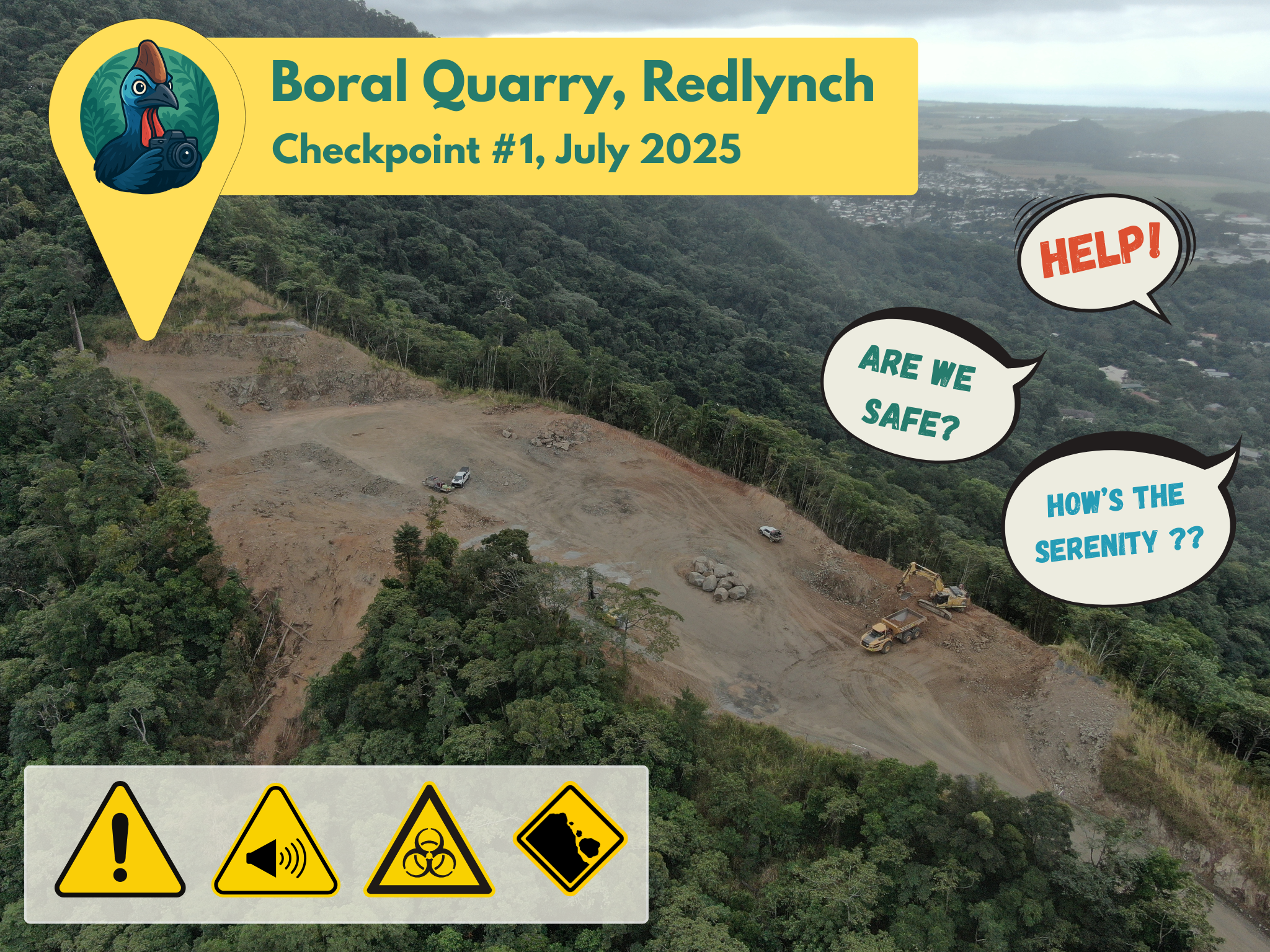

Thanks for your interest in our very first Checkpoint Post. These posts provide a brief but broad update on all things related to the quarry extension. We will publish them as/when required.
Concerned residents have been monitoring the quarry for almost two years. At the end of the 2024/25 wet season the reality of the fifty-year excavation started to take shape. We don’t think it is off to a great start.
Information provided by Boral about plans and progress does not seem to match what is taking place on the ground. And as far as we can see, Boral have cleared land without notifying the Cairns Regional Council (CRC), and have removed the top of the ridge, knowing that it was likely to result in unacceptable noise levels.
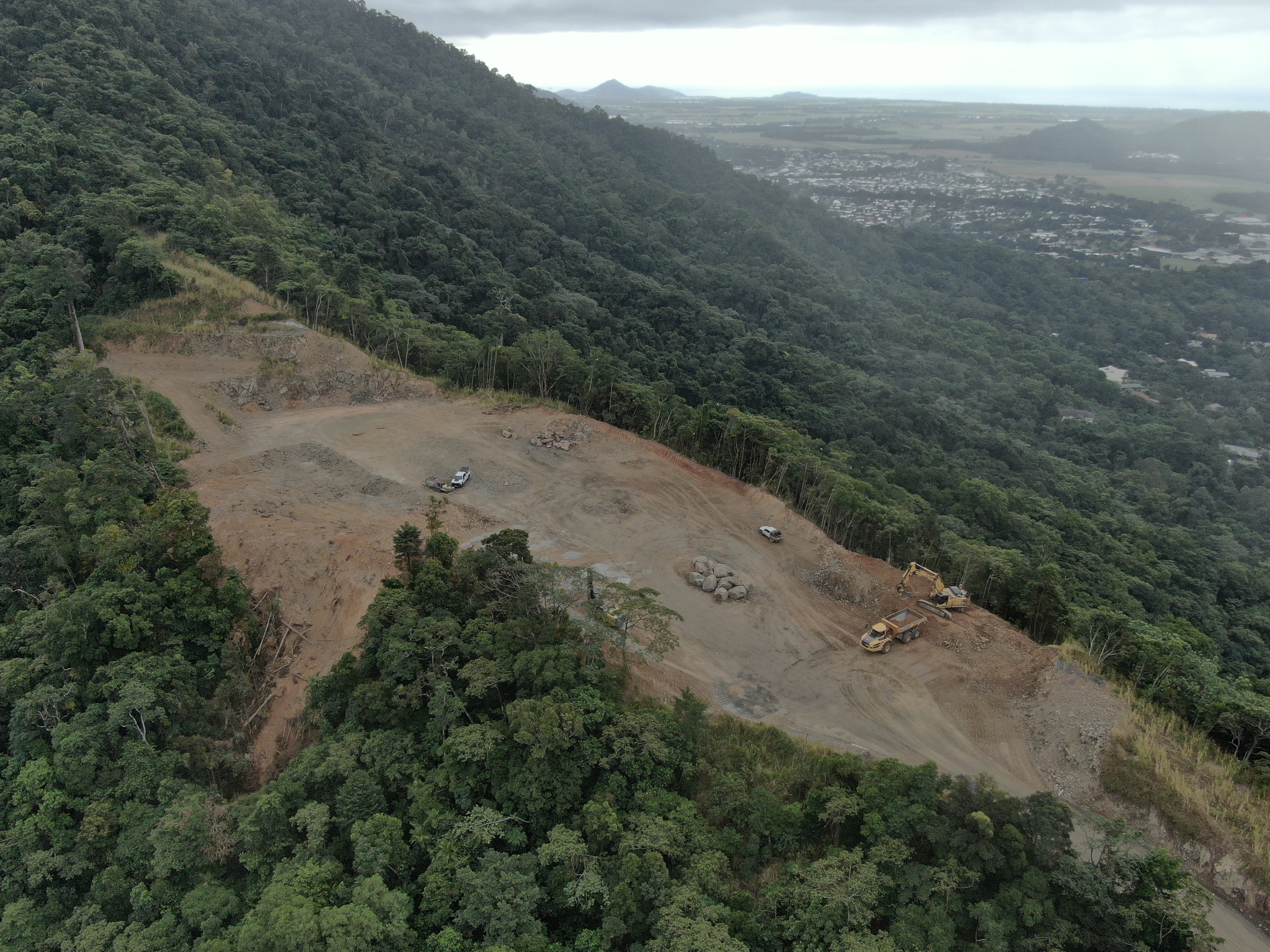
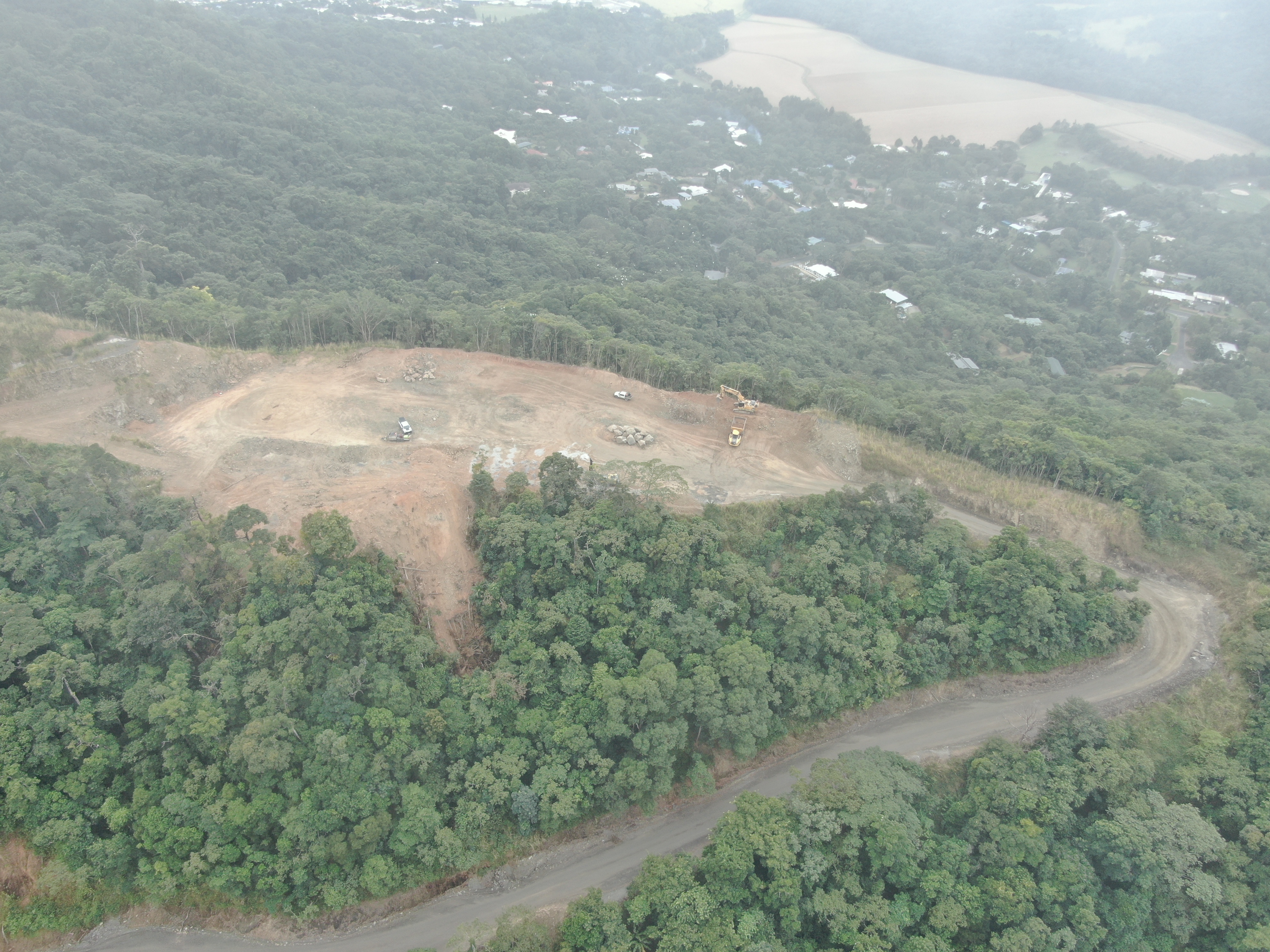
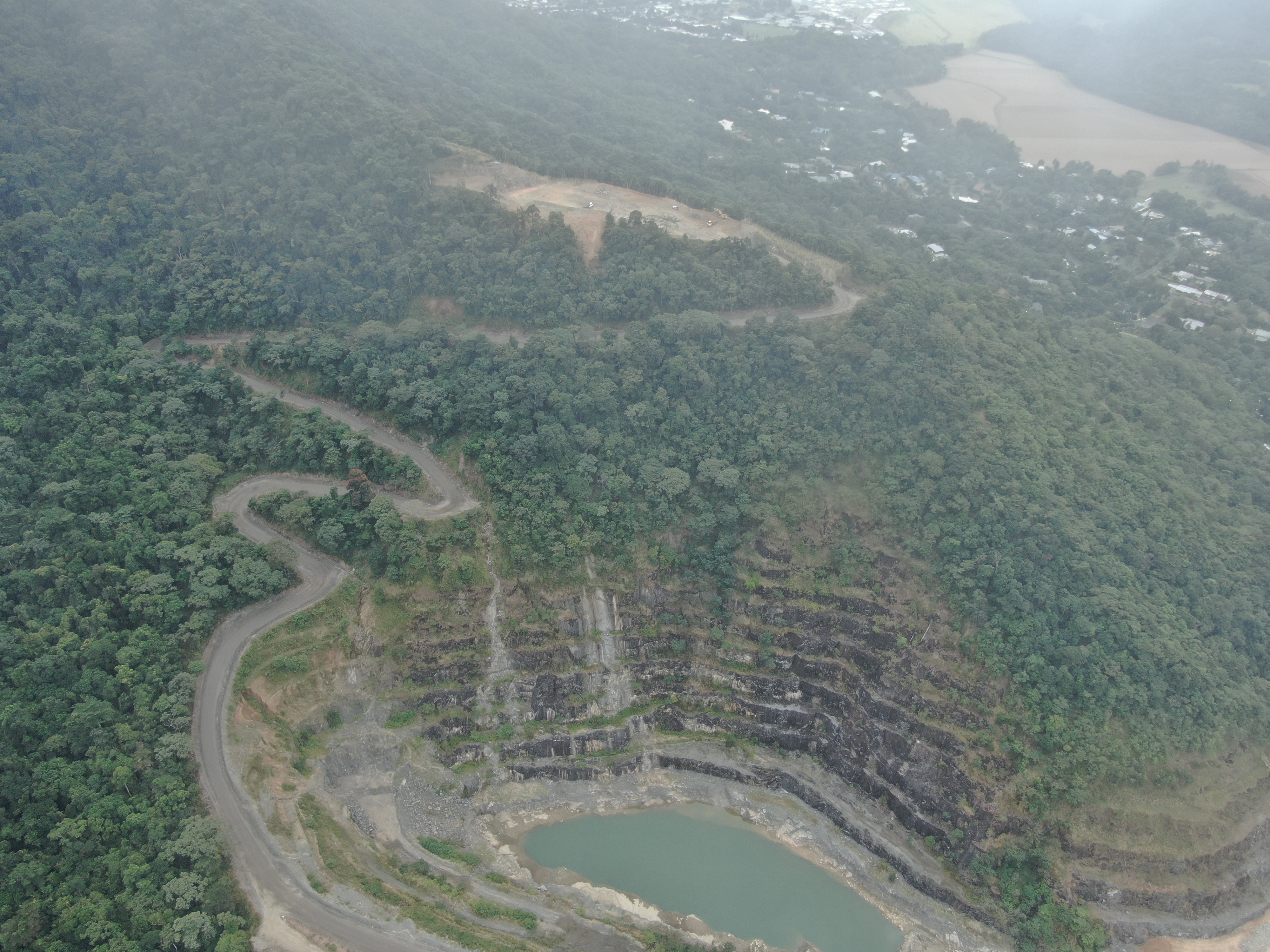
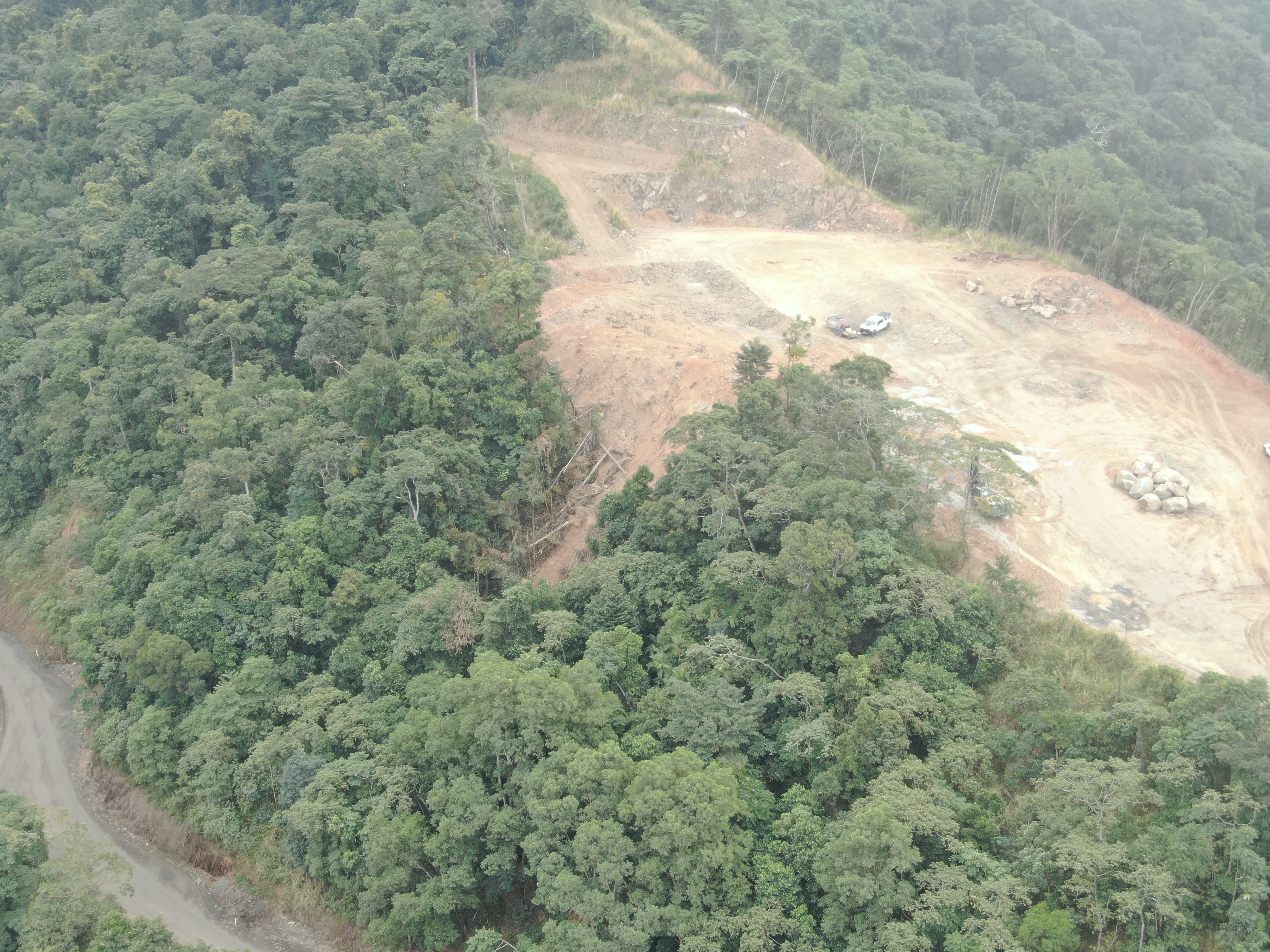
On the flat area, alongside Redlynch Intake Road, the rehabilitation of the old alluvial pit is shaping up as a nightmare – either for Boral, or for the Cassowaries and the neighbours. Boral want to fill the pit with the overburden from the mountainside, but in the 35 years since they were required to rehabilite the area, it has re-established a cassowary habitat, and there has been significant urban encroachment.
Impact Update
Although the quarry is in the early stages it is already having a severe impact on the community and the environment.
- We estimate more than two hectares of rainforest has already been cleared.
- Residents to the north of the site are suffering significant health impacts and loss of amenity, particularly as a result of noise.
- Residents to the south are just starting to feel the effects, with the scar busting into view this month.
The rainforest scar became clearly visible for the first time on Thursday 3 July, when blasting caused the modest landslide shown in the photos above. This has heightened residents’ concerns about rolling rocks and landslides.
Activity and Observations
Redlynch residents have been monitoring the quarry’s progress for two years. Some highlights from recent months are as follows.
- In May, following the wet season, work recommenced at the top of the ridge. An excavator operated for several weeks, followed by a drilling rig making blast holes. This was a particularly noisy time for residents to the north.
- Residents received details of an enforcement notice that had been issued to Boral five months earlier. In short, Boral were given a formal warning for contravening noise limits under the Environmental Protection Act. For more details see the separate blog post on this issue.
- We asked Boral for details of animal spotting/catching activities undertaken this year. Boral declined to name the spotters, but did list species that were relocated or euthanised over two days in June and July. It included five garden-variety lizards, two geckos and a cane toad.
- In addition, Boral’s experts reported taking a Petaurus krefftii into care. However, the DCCEEW, keepers of the Australian Faunal Database, can find no animal by that name. They suggest that maybe the animal was a Petaurus notatus, commonly known as Kreftt’s glider.
- Blasting was conducted on 12 June and again on 3 July. The dust, which includes silica dust, drifted north toward the residential area. See image below.
- Following blasting, the excavator, “Big Yellow”, was again hard at work on top of the ridge. Residents north of the quarry were subjected to several days of industrial noise that exceeded the tolerance of a reasonable person.
- Unable to rest peacefully, some residents spent time handing out fliers, monitoring noise levels with their own equipment, collecting photographic and video evidence, and keeping DETSI and other regulators informed.
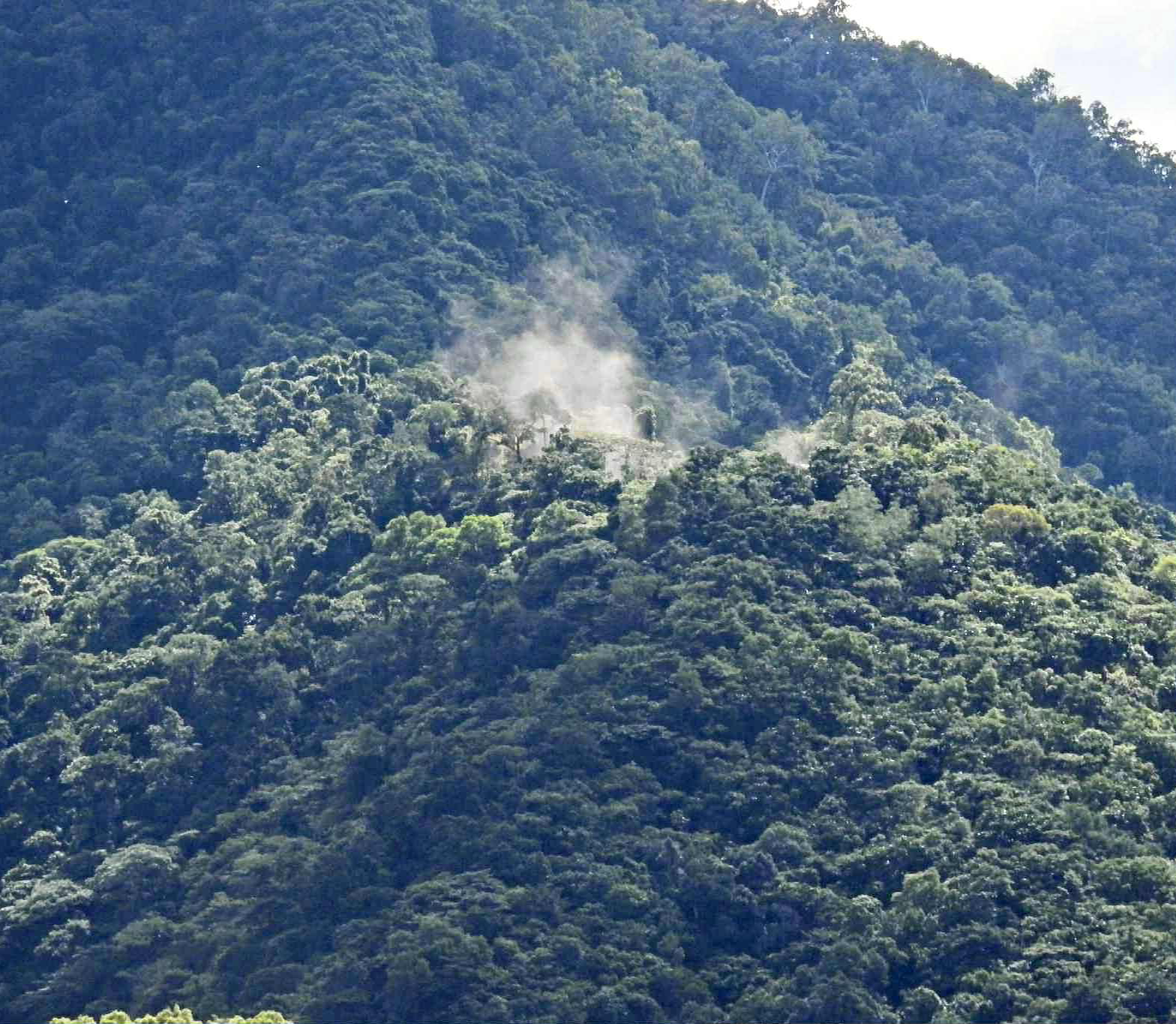 Dust rises after blasting, then heads north. June 2025.
What Stage Are We At?
As stakeholders who are deeply impacted by the quarry’s activity, the community has a right to know what activities are planned, the timeframes involved, and the current state of progress.
The image below is taken from Boral’s development application. It shows the first three of six phases that form part of their approval. Boral have recently advised that they are “still in phase 1 working the top 3 benches”, however we are unable to reconcile this to what is taking place on the ground.
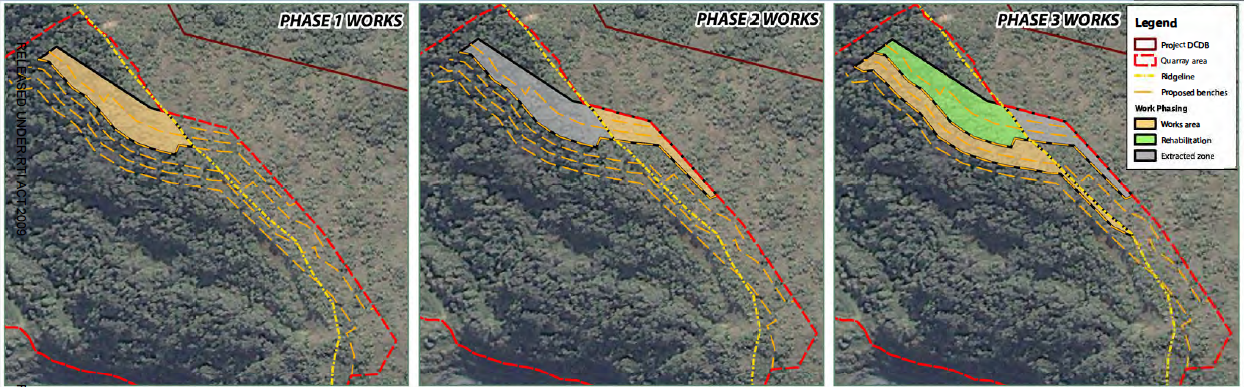 The first three phases, from Boral’s development application.
Judging by the image above, the progression for each section of the quarry seems to have three steps. First it becomes the “works area” where is it cleared, prepared and extracted. It then has a hiatus as the “extracted zone”, before “rehabilitation”.
If Boral were still at phase 1 they would be working the very first section only, the most north-eastern part of the area, south of the ridgeline. However, as the aerial photographs show, Boral have cleared and excavated a far greater area, including areas either side of the ridgeline.
In our estimate, Boral have commenced work, at least partially, on the first four phases. This would seem to square with Boral’s recent statement that initial rehabilitation works were completed in 2024. (The schedule shows rehabilitation as part of phase 3.)
Note that, as a condition of approval, the maximum number of operational benches at any time is three.
Residents who have chosen the valley for its spectacular rainforest and natural surrounds need accurate and timely information on the quarry’s activity, in order to plan their lives. We will seek further details from Boral and CRC, and request a reliable mechanism for receiving this information in the future.
Un-notified Land Clearing
As a condition of its approval, Boral are required to notify the Council at least two days prior to any approved vegetation clearing. In a ‘notification to clear’, submitted to the Council on 7 April 2022, Boral provided the image below, left, to demonstrate the “proposed location and extent of clearing”.
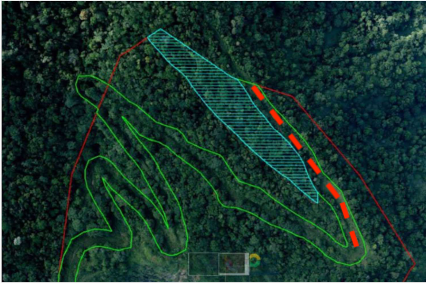
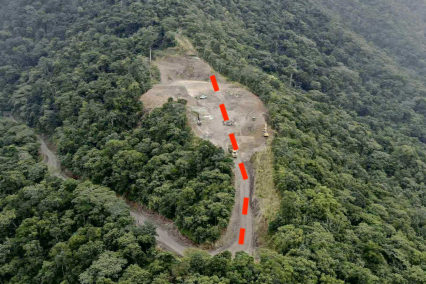
The crosshatched section is the area for proposed clearing. Notice that the entire section occurs south of the haul road (which is marked with a red dotted line). Compare this to the image on the right, taken earlier this year, which shows that the haul road itself has been removed, and the area north of where it once stood has now been cleared.
Why would Boral advise the Council of one thing, but do another?
Note that Boral’s vegetation clearing approval expires on 30 August 2026.
“Daylighting” The Ridge
For decades, residents north of the site have been protected from the quarry’s operation by a mountain ridge. In 2024, they were confused, frightened, and enraged by an onslaught of industrial noise. The problem grew throughout 2024, pausing only for the wet season. By mid 2025, residents looked up from their backyards to see heavy machinery smashing through the trees and bearing down on them.
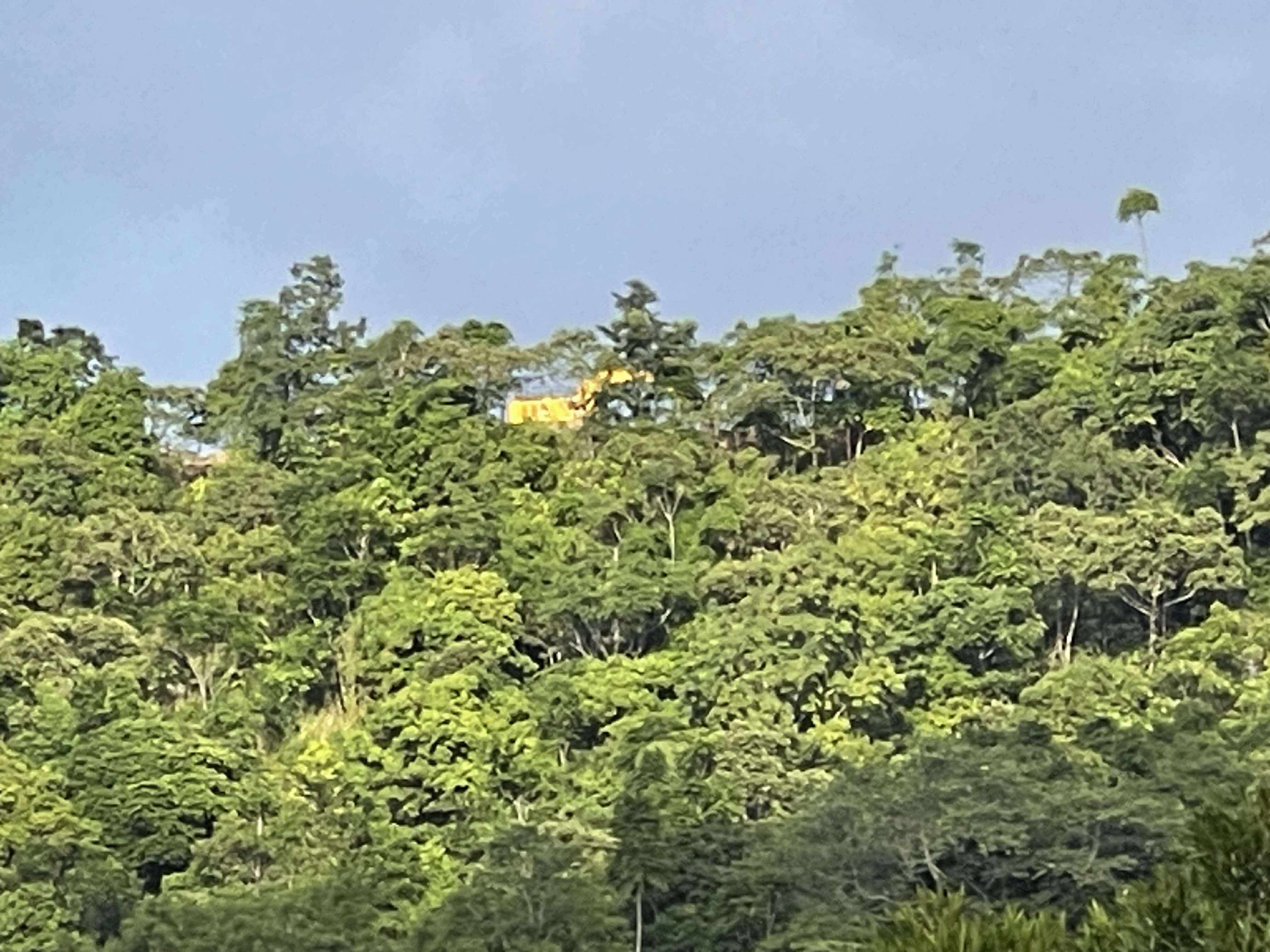 Big Yellow bears down on a local’s backyard.
In 2024 residents complained bitterly about the noise from the ridgeline. As reported elsewhere on this site, DETSI directed Boral to conduct a noise investigation. As a result of the investigation Boral received a formal noise warning. However, the warning was for activity unrelated to the ridgeline. Today, the ruckus on the ridgeline continues unabated and residents are unable to cope.
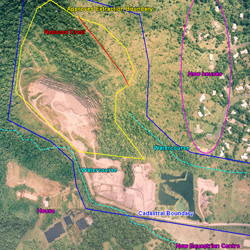 Reduced crest - safe limit for noise (Source: Quarry Magazine)
The image to the right comes from an article written by a Boral project manager and published in Quarry Magazine in 2020. Although the quality of the image is poor it clearly shows a red line, with the words “reduced crest”.
In the text accompanying the image, the project manager explains that “it could be challenging and impractical to meet environmental limits at neighbouring houses”, and that as a result the quarry footprint was reduced to “set the crest line along the spine of the ridge rather than daylighting the top of the hill”. The ‘crest line’ is the red line in the image above.
As the recent photographs show, Boral has clearly removed the crest of the ridge. Complaints from residents living beneath the daylighted ridge confirm that it is indeed unbearable.
In 2020, Boral knew that daylighting the ridge would cause noise violations, and therefore planned not to do it. So what changed between 2020 and 2025? And what are CRC and DETSI planning to do about the current problem? We will attempt to find out.
The Alluvial Nightmare
Another recent development worth mentioning is Boral’s application in February this year to clear vegetation in the area of an historical alluvial quarry. We are watching this issue closely and will report on it in upcoming posts. A brief summary is as follows.
- Boral has been under obligation to rehabilitate the alluvial quarry at the Redlynch site since 1990 and have made no attempt to do so.
- With the mountainside extension now underway, Boral require somewhere to dump the overburden and are planning to use the alluvial quarry pit.
- Boral started by applying for permission to clear vegetation in the alluvial quarry pit.
- However, 35 years is a long time and the Council have advised Boral that the area now contains cassowary habitat.
- Residents have also submitted overwhelming evidence of cassowaries in close proximity to the quarry.
- Despite this, it appears that Boral are still planning to fill the area.
It remains to be seen how this matter develops but right now, it is not looking good for the cassowaries, or the residents that have established homes right alongside the alluvial pit over the last 35 years.
The Final Word
Obviously we have much to do over coming weeks and months. Keep an eye out for our next Checkpoint Post, and register if you would like to be alerted via email.